When I first started following China’s space program, the narrative was simple: state-run, state-controlled, state-driven. Everything moved at the pace of bureaucracy. The Long March rockets launched on schedule, the Shenzhou crews went to the Tiangong space station, and the whole operation felt like a well-oiled machine built in the 1960s.
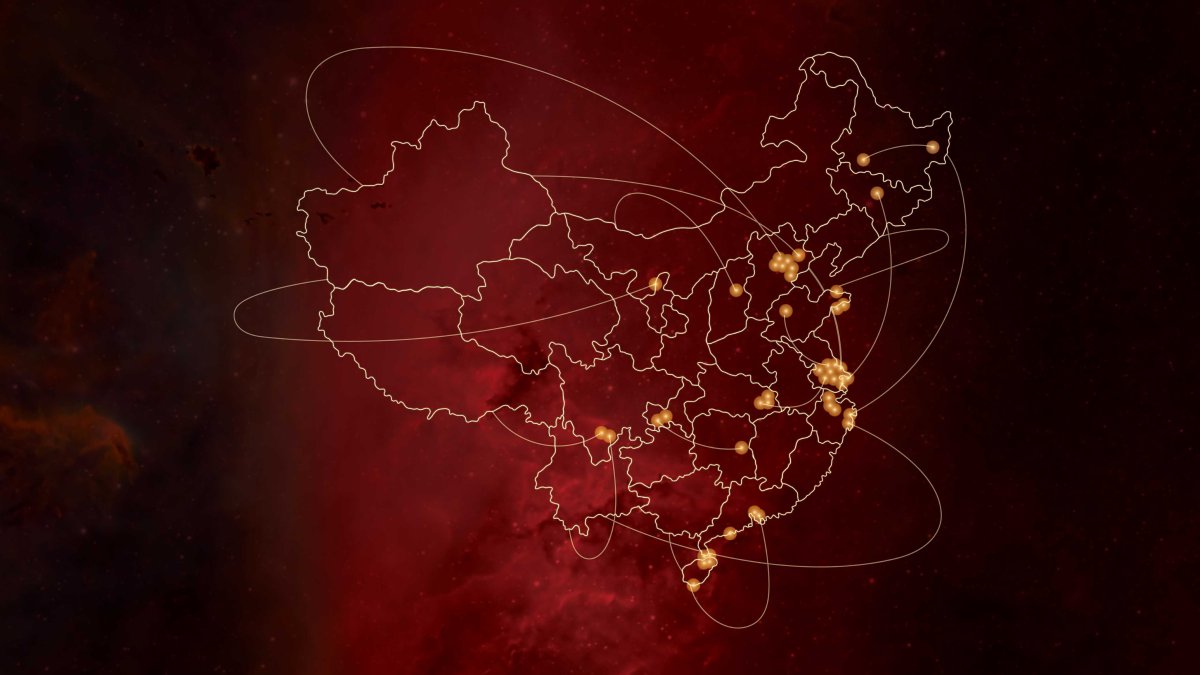
But if you visit Wenchang today, or walk down “Rocket Street” in Beijing’s Yizhuang district, you’ll see something very different. The hum of private companies fills the air. Engineers in startup T-shirts mingle with state-owned enterprise veterans. Venture capital pitches sit alongside government funding announcements. The orbits are no longer clear-cut. They’re blurred.
This is the story of China’s commercial space expansion, and it’s unfolding faster than most people in the West realize.
The inflection point
The turning point came in 2014, when the State Council announced reforms to open the space industry to private capital. Before that, fewer than 10 private companies operated in China’s space sector. By 2022, there were over 430. By 2026, that number has surpassed 600.
I’ve spoken to founders who left the China Aerospace Science and Technology Corporation (CASC) because they were tired of waiting years for approval on decisions that could be made in days. They took their expertise, their networks, and their frustration, and they built something new.
The catalyst, ironically, was SpaceX. Chinese policymakers initially dismissed Elon Musk’s company as a sideshow. But as Falcon 9 started landing itself and launch costs dropped dramatically, attitudes shifted. Chinese leaders recognized that relying solely on state-owned enterprises would leave them behind in one of the most strategically important industries of the 21st century.
The numbers tell the story
In 2025, China completed 92 orbital launches. Fifty of those were commercial missions. That’s 54 percent of all launches. Three hundred and eleven commercial satellites reached orbit, accounting for 84 percent of all satellites launched that year.
These aren’t marginal figures. This is an industry that has moved from “technology verification” to “scaled commercial development” in the span of a single year.
Financing tells another part of the story. In 2025, China’s commercial space sector raised 18.6 billion yuan in funding, up 32 percent year-on-year. At least five private rocket companies are now progressing toward public listings. i-Space, the first Chinese private firm to launch a rocket into orbit, raised a record-breaking 5.037 billion yuan in a single round last month.
The industry’s value is estimated between 2.5 and 2.8 trillion yuan, with a compound annual growth rate exceeding 20 percent. Forecasts suggest launch frequency could surge from 54 launches in 2025 to approximately 860 by 2030, a compound annual growth rate of 74 percent.
The key players
If you want to understand where this is going, you need to know the companies leading the charge.
LandSpace made history in 2023 by becoming the first company in the world to successfully place a methane-powered rocket into orbit. The Zhuque-2 succeeded where SpaceX’s Starship and Relativity Space’s Terran 1 failed that same year. Methane is widely regarded as the most promising fuel for reusable rockets and future interplanetary missions. In late 2025, LandSpace’s Zhuque-3 missed its first-stage recovery by just 40 meters, validating key technologies for liquid oxygen-methane reusable rockets.
i-Space became the first Chinese private firm to launch a rocket into orbit in 2019. Its Hyperbola-1 has conducted multiple successful missions, and the company is now developing the recoverable Hyperbola-3, expected to make its maiden flight in 2026.
Galactic Energy has emerged as one of China’s most successful launch providers. Its PALLAS-2 is preparing for its first launch in 2026, and the company is exploring future opportunities in asteroid mining.
Oriens Space is pushing forward with its “Gravity One” rocket, designed to carry up to 30 satellites per mission. The company plans frequent commercial launches in 2026 to support the networking of internet constellations, while its “Gravity Two” enters a critical development phase.
Deep Blue Aerospace is developing the “Starry Cloud One” rocket, set for its maiden flight around the Spring Festival in 2026. The company also plans to offer suborbital tourist flights beginning in 2027, using a business model similar to Blue Origin.
CAS Space, spun off from the Chinese Academy of Sciences, is developing launch vehicles and preparing commercial space-tourism missions. A spacecraft made by CAS Space completed its suborbital flight test in January 2026.
InterstellOr, China’s first commercial “human spaceflight technology” company, has already signed up over 20 people for China’s first-ever commercial space trip, scheduled for 2028 at 3 million yuan per passenger. The passenger list includes actors, academicians, CEOs, entrepreneurs, and even a humanoid robot from Shenzhen-based Zhongqing Robot Technology.
The state’s role
Here’s where the story gets complicated. Unlike their American counterparts, Chinese commercial space companies benefit from subsidies, tax incentives, access to launch facilities, and investments from provincial governments. The government has opened state TT&C (Telemetry, Tracking and Command) stations to commercial operators. The China National Space Administration (CNSA) established a Commercial Space Department in late 2025 to oversee this expansion.
In November 2025, the CNSA released an action plan to back commercial space firms and encourage them to pursue international cooperation over the next two years. The landmark “Action Plan for Promoting the High-Quality and Safe Development of Commercial Space (2025-2027)” clearly stated for the first time that commercial space enterprises can independently apply for frequency and orbital resources and undertake national space missions.
Aerospace has been elevated to a “pillar industry” in China’s government work report, a step up from its previous classification as an emerging sector. More than 20 provincial-level regions have rolled out supportive policies.
But these advantages come with costs. Dependence on government support can limit operational flexibility and expose companies to changing political priorities. The Chinese government is unlikely to tolerate a figure as independent and influential as Elon Musk. The experience of Jack Ma illustrates the limits imposed on entrepreneurs who become too powerful or politically outspoken.
This constraint could prove important. Space exploration is an industry that rewards extraordinary risk-taking. Companies such as SpaceX succeeded partly because entrepreneurs like Musk were willing to risk billions of dollars on projects that many experts considered unrealistic. Whether Chinese investors and entrepreneurs will demonstrate a similar willingness remains an open question.
The technology race
Reusable rockets are the frontier. In December 2025, LandSpace and CASC conducted the first orbital-level validation of recoverable rocket technology. Multiple companies are now racing to achieve routine recovery and reuse.
Experts predict China’s reusable rocket technology will evolve in three phases: Phase 1 (2025-2027) will focus on validating core technologies like vertical landing, attitude control, and landing cushioning. Phase 2 (2027-2029) aims for a recovery success rate over 90 percent, with rockets reused 20+ times and costs reduced by 50 percent. By Phase 3 (2029-2030), reusable rockets will be commercially applied.
Currently, the launch cost for reusable rockets is more or less 100,000 yuan per kilogram, with a target of reducing it to 20,000 yuan. By 2030, as China’s low-Earth orbit constellation becomes more established, the cost is expected to drop to under 10,000 yuan per kilogram.
Companies are cutting costs by iterating designs and adopting new manufacturing techniques. The adoption of 3D printing, which can produce up to 85 percent of weight in rockets’ engines, reduces component manufacturing costs by 20-30 percent.
The constellation plans
Low Earth Orbit (LEO) satellite internet represents a crucial direction in commercial space at this stage. Unlike traditional geostationary satellites, LEO satellites offer lower latency, reduced link loss, and a simpler structure, making them ideal for large-scale deployment and global communications.
In 2026, China’s satellite internet constellations are expected to undergo high-density networking. The “Qianfan” and “GW” (GuoWang, or “State Grid”) constellations are expanding rapidly. In late December 2025, China submitted a request for orbital resources for an additional 203,000 satellites, its largest-ever international frequency and orbit filing to date.
Satellite manufacturing is entering mass production. Beijing-based satellite maker GalaxySpace operates a smart factory that can cut development cycles by 80 percent and produce hundreds of satellites weighing 1,000 kilograms annually.
Miniaturized, modularized, and componentized satellites have significantly reduced costs and shortened development cycles. A remote sensing CubeSat that cost a million dollars in 2018 can now be delivered in orbit for less than 0.7 million dollars.
The broader ecosystem
The growth of China’s private space sector extends beyond launch services. Increasing numbers of companies are developing satellites, satellite communications systems, Earth-observation technologies, navigation services, and components for the broader space economy.
One particularly interesting example is Geely, China’s largest privately owned automobile manufacturer. In 2018, Geely founded a subsidiary called Geespace to develop a low-Earth-orbit satellite constellation. By late 2025, Geespace had already deployed 64 satellites and plans to expand that number to 240. The company’s goal is to integrate satellite communications, navigation, and Earth-observation capabilities into future generations of autonomous vehicles.
Remote sensing represents the final phase in commercial space. Currently, it accounts for about 30-40 percent of global commercial space applications. Industry experts expect this figure to reach 60-70 percent. China had over 640 civilian remote sensing satellites in orbit as of 2025, positioning it as the world’s second-largest player in this domain.
China Telecom has joined forces with major mobile phone brands such as Huawei, Honor, Xiaomi, OPPO, and vivo in launching around 30 terminal products that support direct satellite connection.
The challenges ahead
The history of Chinese industry reveals a familiar pattern: first imitation, then improvement, and finally innovation. This evolution has already occurred in sectors such as automobiles, batteries, telecommunications, and consumer electronics. There is little reason to assume that space will be different.
But the United States still enjoys a significant advantage. Measured against SpaceX alone, the gap remains substantial. SpaceX has achieved routine recovery and reuse of its Falcon 9 first stages, and Starship is pushing the boundaries of what’s possible. Chinese companies are still in the validation phase.
The question is whether China’s depth across the entire industry can compensate for the gap at the top. In launch services, satellites, communications technologies, and space manufacturing, dozens of Chinese companies are now competing simultaneously. The collective momentum is undeniable.
Another challenge is the relationship between private companies and the state. The Chinese government is unlikely to tolerate a figure as independent and influential as Elon Musk. Whether Chinese investors and entrepreneurs will demonstrate a similar willingness to take extraordinary risks remains an open question.
What this means for the world
The rise of China’s commercial space sector is not just a story about one country’s ambitions. It’s a story about the future of the global space economy.
As launch costs drop and satellite deployment becomes routine, new applications will emerge. Precision agriculture, microgravity pharmaceutical research, reliable remote communications for healthcare, space traffic management, and debris cleanup technologies are all within reach.
The surge in satellites is creating new needs, such as space traffic management and debris management, opening commercial opportunities in monitoring and cleanup technologies.
Long Kaicong, deputy director of the ZGC Commercial Aerospace Industry Innovation Alliance, has advocated for “commercial space for all,” suggesting that open data, lower barriers, and consumer-grade services could allow broader public participation in using, innovating, and investing in the space sector.
The blurred orbits
When I look at the trajectory of China’s commercial space expansion, I see something that defies simple categorization. This is not a state-run program, nor is it a purely private industry. It’s a hybrid model, with the state providing infrastructure, policy support, and strategic direction, while private companies drive innovation, competition, and efficiency.
The orbits are blurred, but that’s precisely what makes this story so compelling. China is building a commercial space ecosystem that rivals Western leaders, not by copying the American model, but by adapting it to fit its own political and economic realities.
Whether this model will produce the next SpaceX remains to be seen. But one thing is clear: the world’s second-largest space power is no longer just a state-run enterprise. It’s a complex, dynamic, and rapidly evolving ecosystem that will shape the future of space for decades to come.
About the Author