
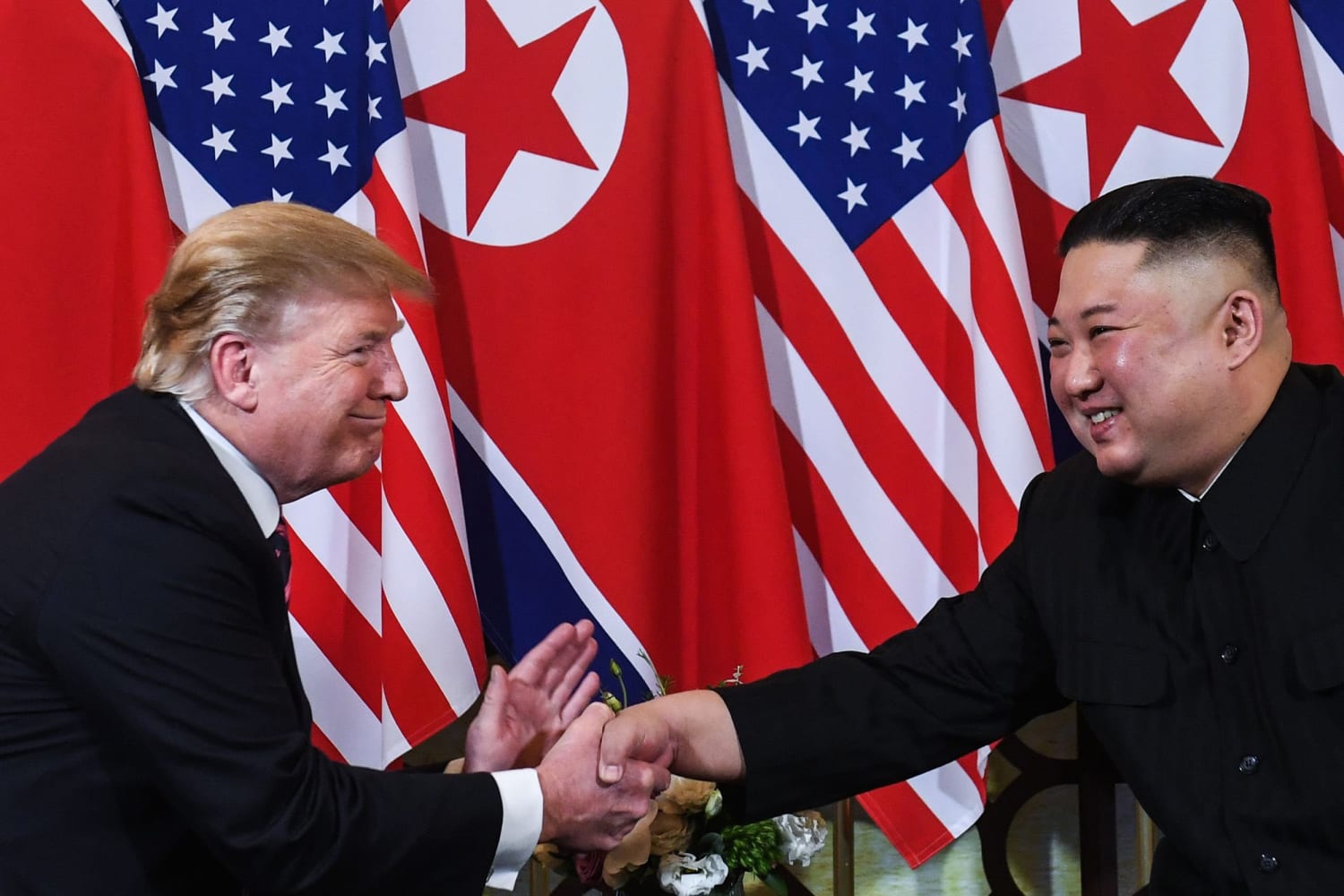
A dispute over the alliance has arisen beyond the annual training schedule due to President Donald Trump’s decision to significantly reduce upcoming U.S.-South Korea military exercises.
The president attributed his decision to two different arguments. To begin with, he asserted that the drills send a needlessly unfriendly signal to North Korea and highlighted his affiliation with Kim Jong Un. Similarly, in a social media message, he mentioned that South Korea had refused to participate in U.S. efforts related to the war against Iran.
The combination has caused immediate uncertainty in Seoul, Washington, and the wider Indo-Pacific region…. Is the decrease a short-term measure to address the Iran conflict? Might this indicate that Washington is looking for more military allies? Could this be an attempt by Trump to re-establish US allegiances on cost-sharing, personal diplomacy, and visible political allies?
To me, the main concern isn’t just determining whether the Ulchi Freedom Shield exercise this year will be bigger or small.
What Trump Announced
On August 17, the annual Ulchi Freedom Shield exercise was to commence, with the United States and South Korea joining forces. An estimated 18,000 individuals were projected to be part of the exercise. South Korean military personnel.
Just hours before the exercise was scheduled to begin, Trump instructed Defense Secretary Pete Hegseth to significantly decrease joint training. According to him, the drills were pricey and sent a negative message to North Korea. According to him, it was too late to completely cancel the plans.
The timing was striking. The planning, coordination, logistics, intelligence preparation, and operational scheduling of military exercises of this magnitude require months. Despite the exercise being technically ongoing, a last-minute change can lead to uncertainty.
In his statement, Trump asked South Korea if they were willing to join the U.S. in denouncing Iran, but Seoul refused. He acknowledged that the matter was somewhat disconnected, but the reference indicated that South Korea’s position on the Iran issue had impacted the public perspective on why they had chosen to proceed.
Many observers have interpreted the decrease as a manifestation of political pressure.
Seoul’s Refusal to Join the Iran War
The reason why South Korea didn’t take a direct role in U.S. military action against Iran is easily understandable.
South Korea’s primary security concern is North Korea. Technically, the peninsula is still at war, and Pyongyang maintains its nuclear and missile capabilities. Seoul’s location, proximity to the Middle East, large civilian population, and potential retaliation in case of war are taken into account.
Political support for the United States is distinct from joining an overseas military operation. Why? South Korea may offer diplomatic assistance, intelligence cooperation, logistical support, humanitarian aid, or sanctions enforcement without deploying troops into the conflict. However, military involvement is not mandatory.
That distinction is important. Despite being founded on mutually beneficial interests, alliances don’t eliminate national decision-making. Although South Korea is an ally of the United States, it doesn’t have to be present in every American military operation outside the Korean Peninsula.
According to Seoul, not participating in the Iran conflict could result in a more cautious approach towards North Korea. This may be influenced by local political factors. The South Korean government must clarify their military commitment to voters who may question why they should take risks in a conflict located far away from East Asia.
This decline does not necessarily mean Washington is being insulted.
The Problem of Linking Separate Issues
Trump’s decision has caused concern due to its apparent link between the Iran issue and the defence relationship between America and South Korea. This is concerning.
Military exercises are not limited to political protests. The purpose of these is to develop readiness, test command structures, improve interoperability, train emergency plans, and strengthen the ability of two militaries to work together under pressure.
Other governments may question the conditionality of defence commitments when exercises are reduced because an ally declines to support another U.S. war. Their inquiry may be whether their involvement in one crisis will impact the support offered in another. Why?
Serious consequences can result from such uncertainty.
An alliance depends on deterrence. In the event of a crisis, North Korea must have confidence in the United States and South Korea’s ability to collaborate quickly and effectively. If there is any evident disagreement between Washington and Seoul in PYOK, it could indicate a political divide within the alliance.
The issue is not that a single inadequate exercise will swiftly eradicate deterrence. The problem lies in the fact that constant alterations, public condemnation, and political bargaining could lead to gradual erosion of confidence.
Building up military readiness is facilitated by repetition. Commanders and units need to collaborate, learn procedures better, handle pressure more effectively, and identify weaknesses before confronting a crisis. Once a training drop is contained, it can be managed. A pattern of insufficient training could be a strategic issue.
North Korea’s Opportunity
It is probable that North Korea will see the conflict as a chance.
The U.S.-South Korean exercises have been met with opposition from Pyongyang, who consider them to be preparations for invasion. The drills are considered defensive and crucial for readiness by both Washington and Seoul, as they have been traditionally argued. In response to North Korea’s criticism, Trump appears to have acted differently by labeling the exercises as inappropriate and hostile.
During the planned drills, North Korea carried out ballistic missile activity. As per Reuters, Pyongyang has fired two ballistic missiles since August 6 in advance of the exercises.
The situation presents a formidable strategic challenge. North Korea could potentially make political concessions by conducting missile tests and sending military signalling, but only if the United States reduces exercises due to mounting pressure.
Meanwhile, Trump seems to think that reducing drills could create conditions for diplomatic efforts. His statement about a “very good” relationship with Kim Jong Un suggests that he views it as reducing tensions through personal communication.
While diplomacy is important, it cannot replace preparedness. Although a relationship with one leader could reduce the risk of confusion, it cannot ensure that North Korea will terminate its nuclear program or cease leveraging differences among the countries.
A major question remains: will downsizing the exercises lead to meaningful talks, or will they just cut readiness won’t change behavior by Pyongyang?
The Iran Connection
The Iran conflict has put a significant strain on America’s alliance system. Why?
Among its objectives, Washington is asking allies to support the wider campaign against Iran’s nuclear capabilities and military equipment. Bases, intelligence, naval support or air-defence assistance, and even logistical cooperation may be offered by some allies. Others may choose to stay out of the fray.’
When allies have different restrictions on participation, it is up to the United States to determine how best to respond.
Expecting every treaty ally to support each major operation would lead to anger and opposition, according to Washington. Refusal, if perceived as a means of punishment not related to the original treaty, could result in allies declining to collaborate during future crises.
South Korea is particularly sensitive in this regard. Through its readiness to fight North Korea, its defence spending, intelligence cooperation, and role in maintaining deterrence, the country already contributes significantly to regional security.
The contribution of an ally must be taken into account for the purpose it plays. South Korea’s military is not just a tool for American forces on ice. The defence of the peninsula remains its primary objective.
Although Seoul is a city, it should be subject to challenging debates about burden-sharing. The discussion should be conducted through established diplomatic channels, rather than abruptly changing core defence exercises.
Cost-Sharing and Strategic Bargaining
The expense of U.S. alliances has been a point of contention for Trump, who has consistently called for partner countries to shoulder more financial burdens. His remark regarding the expenses of the exercises is consistent with his general viewpoint.
There are legitimate ways to negotiate cost sharing. The resources required to deploy U.S. forces overseas are substantial, and allies benefit from American military capabilities. South Korea spent a significant amount of money on its defense and covers antecedent expenses for hosting American troops.
When financial negotiations are merged with operational readiness, this becomes a problem.
The negotiation process allows Washington to prioritize South Korea’s force posture, host-nation support, defence procurement, intelligence sharing, and regional responsibilities. They’re serious issues that need to be discussed in a structured manner.
Reducing military exercises could send a disorganized message.’ Are the objectives to cut costs, provide a sense of security for North Korea, punish Seoul for not joining the Iran conflict, or explore new diplomatic opportunities with Kim Jong Un?
The reasons behind a policy can vary, but in deterrence, uncertainty is hazardous.
What This Means for the Alliance
The U.S – South Korea partnership has previously survived grave conflicts. Cohesion has not been completely shattered despite differences in burden-sharing, trade, sanctions, diplomacy with North Korea, and regional strategy.
The alliance’s strength is not solely due to presidential declarations. The backing comes from military institutions, intelligence connections, joint planning, economic relationships, and years of active involvement.
Yet, connections also are determined by personal beliefs.
Whether Washington views the relationship as a mutual security partnership or based on unrelated U.S. requests, South Korean officials and the general public will be watching closely.
Meanwhile, U.S. officials may think that South Korea is taking advantage of U.” protection to avoid responsibilities beyond the peninsula. Their perspective may be that a prosperous and technological partner should have broader implications for regional and global security”.
A certain degree of truth can be found in both opinions. South Korea’s interests and capabilities should be reflected in its role in maintaining international security. Understanding that one partner expects automatic support while disregarding the other’s Security priorities makes the alliance ineffective is crucial for the United States.
Distinguishing between legitimate and coercive linkage is a challenge.
The Wider Indo-Pacific Consequences
The decision will be under the scrutiny of Japan, Australia, the Philippines, and other U.S. allies in the Indo-Pacific region.
Under pressure, these countries are already evaluating the nature of American commitment. They may inquire about the possibility of Washington continuing to cooperate militarily in the event of a disagreement between allies and if the U.S. operation is underway elsewhere. Why?
The matter at hand is centered on Taiwan and the East China Sea. The need for swift response to a crisis in East Asia would include clear communication, trusting each other’s support, and providing rapid coordination. Partners who anticipate military assistance being reduced as a penalty for political disagreement may be reluctant to take positions that Washington considers necessary.
The dispute is expected to be thoroughly examined by China.? The United States is being portrayed as an untrustworthy or demanding associate by Beijing. Why? An obvious clash with Seoul provides Chinese diplomacy resources for use in the region.
China could avoid creating an excessive level of instability on the Korean Peninsula.
Could Reduction Create Space for Diplomacy?
It’s possible that reducing exercises is being supported.
Despite North Korea’s missile tests and threats, military drills on a large scale can still cause tensions to rise. An interim cutback may provide an opportunity for negotiations, confidence-building measures, or a renewed diplomatic process.
In the past, Trump’s personal connections with Kim Jong Un have led to meetings and reduced tensions. Advocates of his strategy may contend that conventional deterrence has not resolved the nuclear issue and that diplomacy neceses a shift in the atmosphere.
The issue at hand is that concessions must result in a return.
Pyongyang may gain from the United States’ reduction in exercises without receiving concrete commitments from North Korea, but its behavior could still be affected. Why? This cutback could be seen by North Korea as a demonstration that the pressure is being applied while it continues to increase its nuclear and missile arsenal.
A diplomatic approach would be more believable if it included explicit conditions such as limitations on missile testing, communication channels, verification measures, and an agreed-upon framework for future military training. Otherwise, the reduction is risking becoming more of a symbolic gesture than.
The Need for Clarity
TThe Washington and Seoul must now provide a precise explanation of the reduced exercise. Both governments must specify the training elements to be removed, or scaled back; whether the change applies solely for this exercise and how combat readiness will be protected. “.
They need to provide a detailed account of the political and security factors that would necesitate the restoration of full programme. A further important question to consider, however, is whether the decision has a formal or informal connection with South Korea’s refusal to get involved in the Iran operation.
The South Korean public, American service members, and military planners must receive clear responses.. If you have knowledge of its limits and purpose, a smaller exercise can be managed. Uncertainty is magnified when commanders are unable to plan effectively in the face of operational decisions that they believe may be changed due to political differences.
Both governments must maintain a separation of the Iran issue from the security situation on the Korean Peninsula. The diplomatic and strategic consultation process for Iran should be used to address the issue, whereas Korea talks should concentrate on North Korea, deterrence, defence planning, and regional stability. The convergence of these issues may undermine trust in both relationships and hinder future collaboration.
A Test of Strategic Trust
Trump’s recent decision to reduce U.S.–South Korean military exercises has prompted discussions about the future of alliances in an increasingly divided world.
The political tension is a result of the Iran conflict, but it doesn’t fully account for the strategic aftermath. Despite the potential frustration of Washington over South Korea’s decision not to join American military action against Iran, Seoul is clearly fulfilling its own security and legal obligations. North Korea remains the most significant danger to it.
Not all military exercises are symbolic of friendship. Those tools are useful for both preparation and intimidation. This reduces tension by temporarily easing them, but can also create uncertainty when the decision appears to penalize an ally for not joining in on an unrelated conflict.
The most ethical course of action, in my opinion, is not a sudden rise or immediate surrender. Washington and Seoul should discuss burden-sharing, regional responsibilities for North Korea, and diplomatic relations openly. “Don’t assume that responsibility on your own.”. It is crucial for them to uphold the fundamental military collaboration that safeguards from misunderstandings and maintains preparedness.
A well-crafted diplomatic strategy that includes a reduction should include quantifiable commitments and definite actions. In the event that it’s a political reaction to Seoul’S position on Iran, this could potentially transform the alliance into.
Patience, preparedness and credibility on the Korean Peninsula.’. The United States and South Korea could have conflicting views on Iran, diplomatic stances, and expenses. They mustn’t let those differences weaken the alliance framework on which both countries rely when the next crisis hits.
About the Author